When someone you love is grieving, silence can feel awkward. We want to fill the room. We want to say something meaningful, something spiritual, something that will make the moment a little less unbearable. The trouble is that grief is not a puzzle waiting for the right sentence. Some losses are so heavy that there simply is not a sentence that can make them lighter.
Job’s friends actually got one thing exactly right before they began trying to explain everything. Scripture says, “So they sat down with him upon the ground seven days and seven nights, and none spake a word unto him: for they saw that his grief was very great.”
They saw his grief was great, so they sat with him. The problems began when they decided their job was to explain it.
1. Do not say, “Everything happens for a reason.”
There is a biblical truth hiding somewhere behind that sentence: God is sovereign, He is not surprised, and He can work even terrible things for good. But timing matters. Romans 8:28 was never intended to be a conversational shortcut around somebody’s funeral. When a mother has just buried a child, a husband has just lost his wife, or a family has just received devastating news, “everything happens for a reason” can sound less like hope and more like an explanation they did not ask for.
You can believe deeply in the sovereignty of God without pretending you know the reason for this particular pain. Sometimes the faithful answer is simply, “I do not know why this happened. I am so sorry. I am here.”
2. Do not begin with, “At least…”
“At least you had thirty years together.” “At least she did not suffer long.” “At least you have other children.” “At least he knew the Lord.” Some of those statements may contain something true, but the words at least almost always shrink a loss that feels enormous to the person living inside it.
A grieving person does not need you to prove that the situation could have been worse. They already know there are things for which they can be grateful. Gratitude and grief are not enemies. A person can thank God for thirty years and still ache because there will not be thirty-one.
3. Be careful with, “I know exactly how you feel.”
Your own experience can eventually become a bridge, but it should not become a measuring stick. Even if you have experienced a similar loss, you have not lived this exact relationship, this exact history, or this exact goodbye. Saying “I know exactly how you feel” can unintentionally move the conversation away from their pain and toward your story.
A gentler sentence is, “I have walked through something that hurt deeply too, but I know your grief is your own. If it would ever help to talk, I will listen.”
4. Do not use theology to shut down tears.
“God is good.” “He is in a better place.” “She is with Jesus.” “You will see him again.” For a believer, those truths can become anchors. But even the truest doctrine can be used badly when it is offered as a reason someone should stop grieving.
Jesus knew Lazarus would be alive again in minutes, and still “Jesus wept.” Hope did not cancel His tears. Resurrection did not make the grave painless. Christianity gives us a reason to grieve with hope; it does not give us a reason not to grieve.
Notice that Paul did not say, “sorrow not.” He said we do not sorrow as others which have no hope. Christian sorrow is still sorrow.
5. Do not say, “God needed another angel.”
This one is meant tenderly, especially when a child dies, but it is not what the Bible teaches. Human beings do not become angels when they die. More importantly, the sentence can make God sound as though He took someone because heaven was understaffed. That is not a burden a grieving family needs added to its pain.
You do not need a sentimental explanation. If the person who died knew Christ, you can simply say, “I am grateful we have hope in Jesus, and I know that does not make you miss them any less today.”
6. Do not tell them to “be strong.”
People in grief are often already spending enormous energy simply getting through the day. “Be strong” can make tears feel like failure. Scripture repeatedly gives hurting people permission to lament, cry, ask questions, and admit weakness. Sometimes strength looks like getting out of bed. Sometimes it looks like asking for help. Sometimes it looks like crying in front of somebody safe.
Instead of asking them to perform strength for you, give them a place where they do not have to.
7. Do not disappear because you are afraid of saying the wrong thing.
This may be the most important one. Fear of saying something awkward can become an excuse to say nothing and do nothing. The grieving person does not need polished words, but they do need people. A short text, a meal left at the door, a handwritten note, a remembered anniversary, or a simple “I was thinking about you today” can matter more than you realize.
Presence is often remembered long after sentences are forgotten.
What can I say instead?
“I am so sorry. I love you. I do not know what to say, but I am here.”
“I was thinking about Sarah today. I miss her too.” Using a loved one’s name can be a gift.
Instead of “Let me know if you need anything,” try, “I can bring dinner Thursday. Would that help?”
“You do not have to be okay with me. If you want to talk about him, I would love to listen.”
And then keep showing up.
The funeral is not the finish line of grief. Often it is when everybody else returns to normal that the grieving person discovers how different normal now feels. Put the birthday on your calendar. Remember the anniversary. Send the text three months later. Invite them without pressuring them. Do not be afraid to mention the person who died.
There is no perfect sentence for grief. That may actually be freeing. You are not being asked to fix what you cannot fix. You are being asked to love somebody in the middle of it.
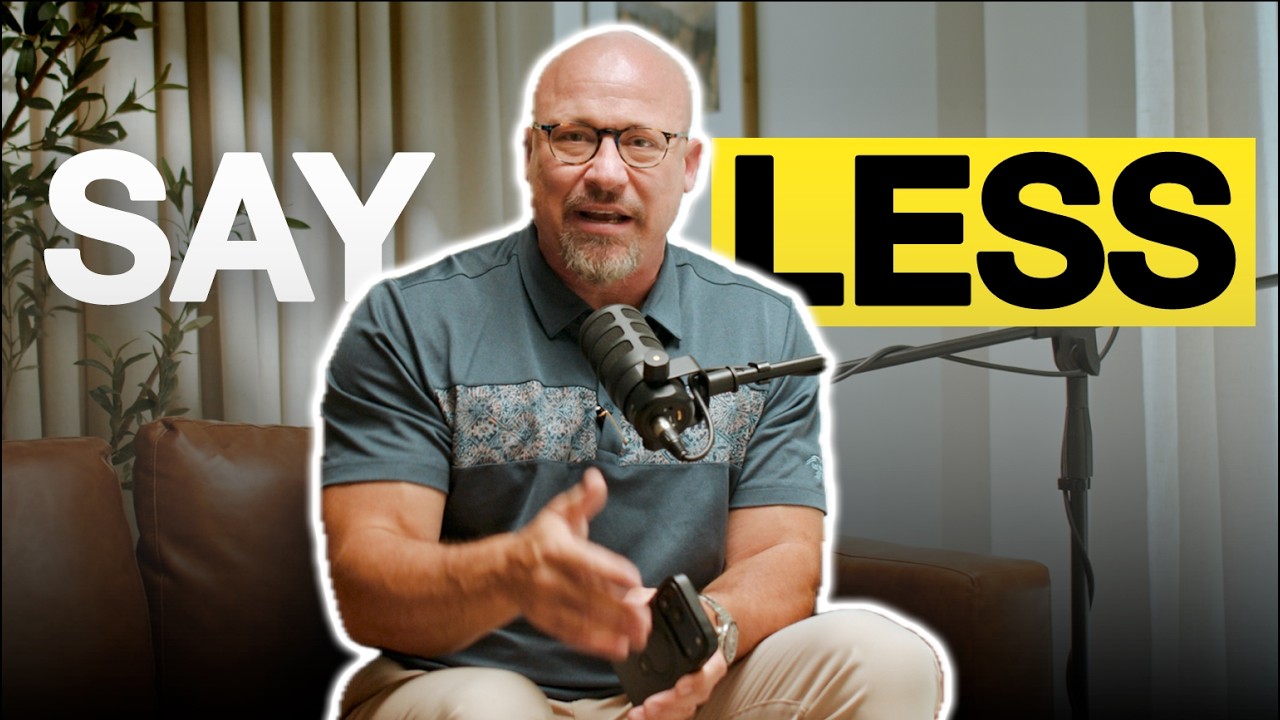
What NOT to Say to a Hurting Person
Good intentions do not always land as comfort. In this episode, Pastor Tate talks through common things Christians say to people in pain, why some well-meant phrases can make the hurt heavier, and what loving presence can sound like instead.
Watch on YouTube →